
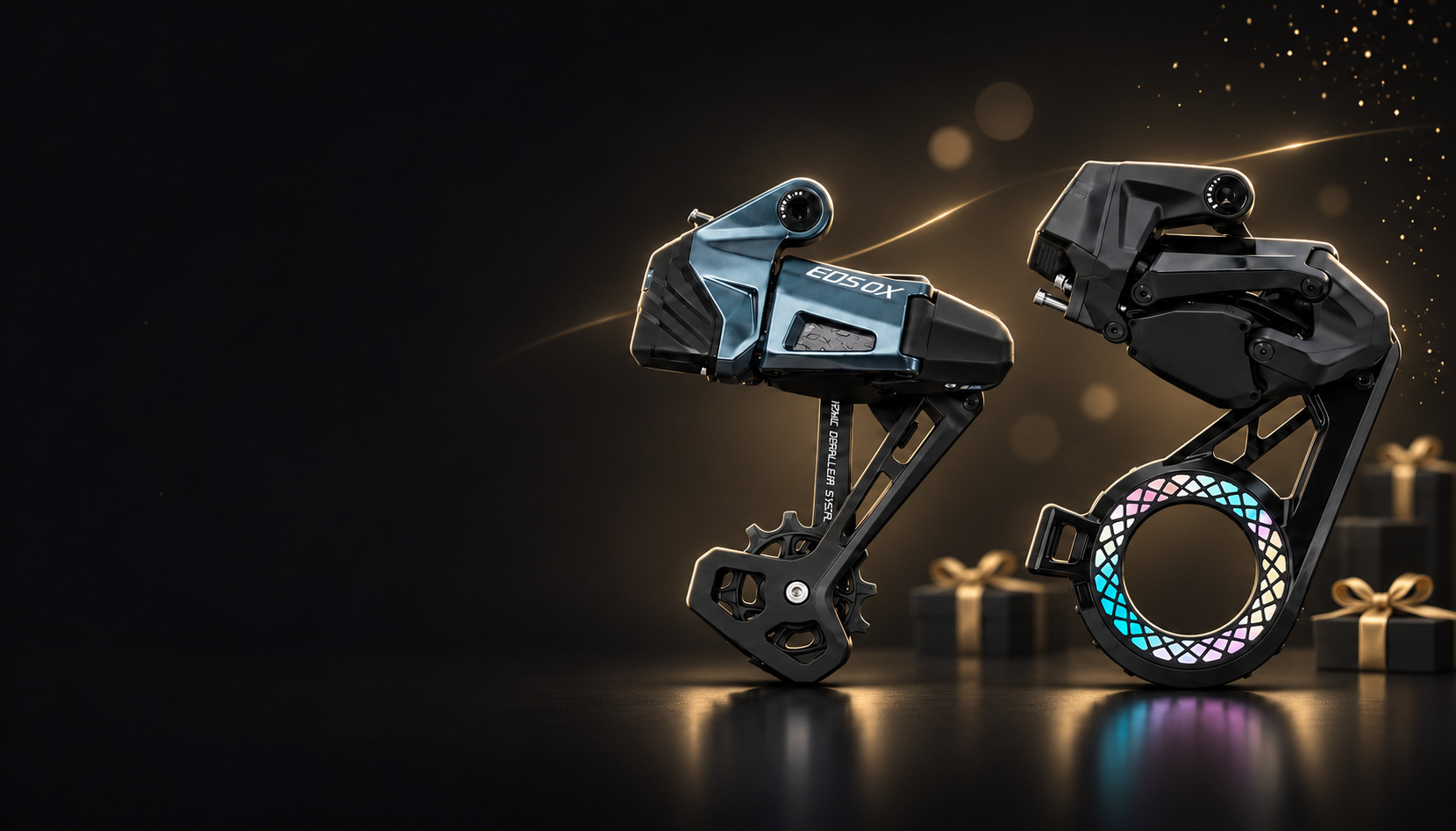
Best Budget Road Bike Groupset 2026: Mechanical vs Affordable Wireless Electronic
Looking for the best electronic groupset for a road bike on a sensible budget? Compare mechanical tiers with the WHEELTOP EDS TX wireless 2x kit—real weights, what you can reuse, frame checks, and value trade-offs.
Quick answer: If lowest upfront cost and zero charging are your priority, a mechanical road groupset is still the simplest choice. If you want the best electronic groupset for a road bike on a sensible budget, the WHEELTOP EDS TX is a wireless 2x road groupset that lets you keep your existing 7–14 speed cassette (up to 36T), crankset, and chain, available in both hydraulic disc and rim-brake versions with IP67 derailleurs. Check current US pricing on the product page.
What Actually Determines Value in a Budget Road Groupset
When riders ask which road bike groupset offers the best value for money, the sticker price of the box is only half the math. Total upgrade cost depends on how many existing parts you have to throw away to make the new shifting work.
- Drivetrain reuse: A fixed-speed groupset often forces a new cassette, chain, and sometimes a new freehub body or crankset. A software-adjustable wireless kit that matches your existing 7–14 speed cassette avoids replacing healthy drivetrain parts.
- Brake compatibility: Older road frames use cable-actuated rim brakes; modern frames use Flat Mount hydraulic disc brakes. Buying a groupset that matches your frame saves an entire frame or wheelset swap.
- Gear range for climbs: Your chainrings and largest cassette cog determine climbing ease. Make sure the rear derailleur clears the largest cog you actually ride (up to 36T on EDS TX).
- Ongoing maintenance: Mechanical shifting needs periodic cable tension adjustments and cable/housing replacements as cables stretch. Wireless electronic shifting removes shift cables altogether, trading that upkeep for periodic battery charging.

Mechanical Road Groupsets: Where They Still Make Sense
Mechanical drivetrains remain the practical baseline for riders building a commuter, winter bike, or first road bike on the tightest possible budget.
- Entry-level mechanical (8–9 speed): Common on starter road bikes. Replacement cassettes and chains are inexpensive, and any local shop can service them with basic cable tools.
- Mid-range mechanical (11–12 speed): Closer gear jumps and crisper lever ergonomics, though hydraulic disc versions push the total cost much closer to entry-level wireless electronic kits.
- The real trade-off: Mechanical systems never need a charger, but internal cable routing through modern handlebars and stems makes cable replacement time-consuming compared with wireless shifters.
Affordable Wireless Electronic: WHEELTOP EDS TX Specs & Real Weights
The WHEELTOP EDS TX is a 2x wireless drop-bar groupset designed for road and all-road bikes. Instead of locking you to a single speed count, you set the cassette speed in the free WHEELTOP App (iOS and Android) and fine-tune each cog individually.
- Speed & cassette support: 7–14 speed configured in the app, rear derailleur clears cassettes up to 36T with 12T narrow-wide pulleys.
- Measured component weights: Front derailleur 191.3g; rear derailleur 336.6g (carbon cage) or 354.2g (alloy cage); carbon rim-brake levers 202.3g left / 214.6g right; carbon hydraulic disc levers 223.2g left / 223.6g right; disc brake calipers 135g front / 170g rear.
- Carbon vs. alloy disc kits: All TX shift levers are carbon fiber. On the hydraulic disc version, the difference between the carbon and alloy options is the rear derailleur cage plate material.
- Batteries & charging: Integrated (non-removable) 800mAh / 7.4V (5.92Wh) rear derailleur battery rated for 20,000+ shifts per charge, and 500mAh / 7.4V (3.7Wh) front derailleur battery. Both charge via the included magnetic Pogopin USB cable (5V, under 2A), one cable is all you need, since you charge the front and rear derailleurs one after the other. Shift levers use tool-free replaceable CR2032 coin cells (typically lasting over a year).
- Weather sealing & connectivity: IP67 waterproof derailleurs (1m depth for 30 minutes), BLE + ANT+ to display gear position and battery level on compatible cycling computers, plus Standard (auto-sleep) and Racing (always-awake, fastest response) modes.

Rim Brake vs. Hydraulic Disc: What Is Included (and What You Reuse)
One reason riders overshoot their budget is assuming an upgrade kit includes every drivetrain part, or realizing too late that their brake mounts do not match. Here is how the two TX configurations break down:
- Standard TX upgrade kit (rim or disc): Includes the wireless shift levers, front derailleur, rear derailleur, and magnetic charging cable (plus hydraulic calipers and pre-cut hoses on the disc version). It does not include a crankset, cassette, chain, or disc rotors, you reuse your existing compatible drivetrain parts.
- Rim-brake TX version: Uses standard mechanical brake cables and pairs directly with your existing rim-brake calipers. This is one of the few ways to add wireless electronic shifting to an older rim-brake road frame without replacing the whole bike. See our rim-brake wireless conversion checklist.
- Hydraulic disc TX version: Uses one-piece CNC calipers with full-ceramic pistons and mineral oil (compatible with Shimano mineral oil and BH90 barb/olive fittings if you trim hoses). Calipers are Flat Mount only, and the supplied mounts fit 160mm rotors (140mm mounts are not supplied). Calipers and hoses arrive pre-bled; after installation, attach a bleed funnel at the brake lever and squeeze repeatedly until no air bubbles remain. Check Flat Mount vs. Post Mount before ordering.

Pre-Order Frame & Setup Checks (Avoid the Most Common Mistakes)
Before ordering any budget electronic road groupset, run through these four mechanical checks, they prevent almost all installation headaches: You can verify your frame, cassette, and brake mount with our WHEELTOP compatibility checker.
- Check your derailleur hanger first: The hanger must be straight (parallel to the cassette) and have a proper bottom step so the rear derailleur stop tab seats against it and pivots freely. Optimal distance from the inner hanger face to the outer face of the smallest cog is 4–6mm. Torque the rear derailleur mounting bolt to 8.0–10.0 N·m without grease on the hanger threads.
- Verify cassette size: Keep the largest cog at 36T or smaller for EDS TX. If you run a 1x gravel or wide-range 42T–52T cassette, step over to the WHEELTOP EDS GeX instead (75mm cage up to 42T at 368g, or 93mm cage up to 52T at 400g; UDH frames are partially compatible as hanger-mounted, not direct-mount). Read EDS GeX vs. TX.
- Set B-tension and calibrate while pedaling: On the largest cog, adjust B-tension so the upper pulley sits roughly 8–10mm from the cog. Always keep turning the cranks during initial calibration and fine-tuning (`+R / L−` in the app), and never run initial calibration while riding. Step-by-step instructions are in the WHEELTOP EDS TX Manual.
- Wake the derailleurs out of the box: Kits ship powered off for transport and come pre-paired from the factory. Plug in the magnetic charging cable briefly to wake them, you do not need to re-pair unless you replace a component.
Mechanical vs. Budget Wireless vs. Premium Electronic
- Choose mechanical if you want the lowest total build cost, ride a dedicated bad-weather commuter, and never want to think about battery charging.
- Choose WHEELTOP EDS TX if you want wireless drop-bar shifting, a cable-free shift cockpit, per-gear app fine-tuning, and the flexibility to upgrade an existing 7–14 speed rim- or disc-brake road bike without replacing your cassette and crankset.
- Comparing with flagship systems? See our side-by-side breakdowns in WHEELTOP vs. Shimano Di2 and WHEELTOP vs. SRAM AXS.
Frequently Asked Questions
Which road bike groupset offers the best value for money if I already have a good frame?
If your frame, wheels, cassette, and crankset are already in good shape, an upgrade kit that reuses them delivers the strongest value. Mechanical 11-speed is the lowest-cost full refresh, while WHEELTOP EDS TX lets you jump straight to wireless 2x electronic shifting on your existing 7–14 speed cassette (up to 36T) without buying a new wheelset or freehub.
Can I run WHEELTOP EDS TX as a 1x road setup?
Yes. You simply leave the front derailleur off the bike and map both left and right shift levers to control the rear derailleur in the WHEELTOP App. Note that 2x TX kits are sold as complete sets (the front derailleur is not removed from the kit), so you can keep the front derailleur as a spare if you ever switch back to 2x, or choose the dedicated 1x EDS GeX if you need cassettes larger than 36T.
How often do I need to charge the batteries, and are they removable?
The derailleur batteries are integrated into the derailleur bodies and are not user-removable. WHEELTOP rates the 800mAh rear derailleur at 20,000+ shifts per charge, while the shift levers run on replaceable CR2032 coin cells. See our WHEELTOP battery life and charging guide for charging habits.
Does WHEELTOP EDS TX fit my current road bike?
Check four things: your cassette is 7–14 speed with a largest cog of 36T or less, your frame matches the brake version (rim brake or Flat Mount disc with 160mm rotor clearance), your derailleur hanger is straight with a proper stop step, and your front derailleur mount fits your frame. Full details are in the WHEELTOP EDS Compatibility Guide.
What warranty comes with WHEELTOP EDS from Aoeagle?
As a WHEELTOP partner serving US riders, Aoeagle covers the electronic shifting components (rear derailleur, front derailleur, shift levers) and brake caliper bodies with a 1-Year Limited Warranty from the date of delivery. Normal wear consumables such as brake pads and hoses are excluded. For warranty or technical support, riders can contact support@aoeagle.com.
Shop WHEELTOP Road & Gravel Groupsets
Ready to compare versions and live US pricing? Explore the WHEELTOP EDS TX 2x Road Groupset or the WHEELTOP EDS GeX 1x Gravel Groupset.


